
by Faye Fentin ASID, CID
Eco Committee Member, ASID San Diego
Thinking about specifying LED lighting as an energy-saving alternative for your next project? Let me tell you about my experience.
The project required a creative, yet efficient, lighting layout for a kitchen/family room remodel. Before writing the specifications for the room, I spoke with a lighting specialist, attended the ASID chapter meeting on Title 24 lighting and researched LED lighting on the internet. I felt it was my responsibility to educate my client on the power of LED and do my share to help the environment.
The project required a reconfiguration of the recessed can lights in the room. I informed the client in advance that I wanted to share this new energy-saving solution with them. At the meeting with the client, contractor and electrician, I brought a working sample and listed the many benefits of the light. I noted at the time that incandescent lights were about $75.00 per can and the LED would be about $125.00 per can. The client was excited and ready to proceed with LED.
The electrician submitted his bid and the cost was $2,500 more than the original bid. I immediately inquired about the difference and was told that the original bid was for florescent lighting, not incandescent, and that was why there was such a large difference in price. After in-depth research and a detailed breakdown of each line item, the cost differential was low enough for my client to proceed. The room now has plenty of light and the client may never have to change a light bulb again.
When selling LED, I would talk with the electrician before you meet with the client so you can clearly discuss the cost differences and benefits of the product. It is important that the electrician has all the necessary specifications to install the lights, and you should be aware that he might add costs simply because it is a new and unfamiliar product.
Important note: LEDs cannot be retrofitted into an old fixture. Also, the can lights have a smaller light spread, so the project will require more fixtures.
Benefits of LED:
• Long life span – lasts 50,000 hours / 20 years, leading to less landfill waste
• Consumes 85% less energy than incandescent
• Consumes 50% less energy than fluorescent
• Softly washes walls – no hot spots or glare
• Cool or warm color options available
• No UV rays – protects art and fine fabrics
• Bulb emits no heat or mercury
• Extremely compact and dimmable
• Annual electrical costs for an average kitchen with 6 can lights:
LED -$13.50 – Incandescent- $68.00
Since the invention of the light bulb, access to light has never been so efficient and eco-friendly. Start specifying LED – it will change our world.
Friday, July 10, 2009
Tuesday, June 9, 2009
CORK FLOORING: A Naturally Green Solution for Designer Floors
by David McCowan
ProSource Wholesale Flooring, ASID Industry Partner
Since the early 1900’s, cork has been used as a natural alternative flooring surface. Cork flooring is a healthy choice that will perform to the standards of today’s consumer for years and years.
 Constructed of a renewable material, cork flooring is made from the bark of the cork tree. This is very environmentally friendly, as the bark will replenish itself time and time again.
Also, due to the repeated intervals during which a cork tree re-grows its bark, it will absorb 5 times as much carbon dioxide as a tree with a full growth of bark. And, cork flooring is made from the leftover material used in the wine bottle stopper industry, thereby keeping waste out of the landfill.
Today’s cork floors are very durable. They are sealed with 5 coats of UV cured acrylic finish.
For more information or to see the full line of Natural Cork Flooring, please contact ProSource Wholesale Floorcoverings or visit http://www.prosourcefloors.com/.
ProSource Wholesale Flooring, ASID Industry Partner
Since the early 1900’s, cork has been used as a natural alternative flooring surface. Cork flooring is a healthy choice that will perform to the standards of today’s consumer for years and years.
 Constructed of a renewable material, cork flooring is made from the bark of the cork tree. This is very environmentally friendly, as the bark will replenish itself time and time again.
Also, due to the repeated intervals during which a cork tree re-grows its bark, it will absorb 5 times as much carbon dioxide as a tree with a full growth of bark. And, cork flooring is made from the leftover material used in the wine bottle stopper industry, thereby keeping waste out of the landfill.
Today’s cork floors are very durable. They are sealed with 5 coats of UV cured acrylic finish.
A few more reasons that cork is a great choice for flooring:
Sustainability. Cork trees live for over 200 years and can be harvested every 9 to 11 years.
 E-1 Manufacturing Standards. Most cork flooring is manufactured in Portugal where there are very strict laws regarding chemical content, work environment, and waste material. These floors pass rigorous environmental standards set by the European E-1, which is the equivalent to the United States EPA.
Comfortable and Resilient. Cork provides a cushion underfoot and bounces back from heel and furniture marks better that wood, carpet, and vinyl floors.
Thermal and Acoustic Insulator. Cork reduces impact noise and therefore is a great flooring choice for high-rise applications. Cork is also a very good insulator. It’s warmer in winter and cooler in summer than many other flooring products, thus reducing heating and air conditioning costs.
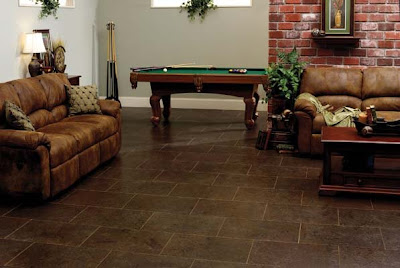 Anti-microbial and Insect Repellent. Suberin is an inherent substance in cork and is a natural insect repellent. The underside of the cork plank is treated with Microban to prevent the growth of mold and mildew.
Sustainability. Cork trees live for over 200 years and can be harvested every 9 to 11 years.
 E-1 Manufacturing Standards. Most cork flooring is manufactured in Portugal where there are very strict laws regarding chemical content, work environment, and waste material. These floors pass rigorous environmental standards set by the European E-1, which is the equivalent to the United States EPA.
Comfortable and Resilient. Cork provides a cushion underfoot and bounces back from heel and furniture marks better that wood, carpet, and vinyl floors.
Thermal and Acoustic Insulator. Cork reduces impact noise and therefore is a great flooring choice for high-rise applications. Cork is also a very good insulator. It’s warmer in winter and cooler in summer than many other flooring products, thus reducing heating and air conditioning costs.
 Anti-microbial and Insect Repellent. Suberin is an inherent substance in cork and is a natural insect repellent. The underside of the cork plank is treated with Microban to prevent the growth of mold and mildew.
For more information or to see the full line of Natural Cork Flooring, please contact ProSource Wholesale Floorcoverings or visit http://www.prosourcefloors.com/.

Friday, May 8, 2009

Friday, April 17, 2009
Walk & Talk Green in Your Design Practice
Part Two
by Sharon Burns, ASID, CID
Art Consultants + Design
Here are the final five guidelines to put into your design practice:
6. Find green vendors. Find products and manufacturers that meet your green guidelines. Consider smaller firms and custom manufacturers who are traditional builders. Don’t forget to consider antiques and collectibles, as by using already-made items, you are recycling and eliminating a manufacturing process.
7. Start the process early. Attempt to be involved as early on in the project as possible so that you can broach the subject of sustainability at the onset, hopefully in the schematic design phase. Address the subject with the client, the architect, and the contractor.
8. A little education goes a long way. Green education can take many forms, from talking to clients about green solutions, to discussing green solutions with team members, to asking environmental consultants to conduct seminars with your contractors so that their tradespersons might learn new, healthier and better ways of doing things.
9. Build a network of collaborators. As you begin to work with an eye for sustainability, you will identify those architects, contractors, and others who are also interested in caring for the environment.
10. Share your solutions. Too often eco-friendly practices and information remain imbedded with individuals and offices rather than shared with peers and colleagues. Create an archive of green solutions that can be used intra- and inter-office, so that both interior designers and the profession can progress.
by Sharon Burns, ASID, CID
Art Consultants + Design
Here are the final five guidelines to put into your design practice:
6. Find green vendors. Find products and manufacturers that meet your green guidelines. Consider smaller firms and custom manufacturers who are traditional builders. Don’t forget to consider antiques and collectibles, as by using already-made items, you are recycling and eliminating a manufacturing process.
7. Start the process early. Attempt to be involved as early on in the project as possible so that you can broach the subject of sustainability at the onset, hopefully in the schematic design phase. Address the subject with the client, the architect, and the contractor.
8. A little education goes a long way. Green education can take many forms, from talking to clients about green solutions, to discussing green solutions with team members, to asking environmental consultants to conduct seminars with your contractors so that their tradespersons might learn new, healthier and better ways of doing things.
9. Build a network of collaborators. As you begin to work with an eye for sustainability, you will identify those architects, contractors, and others who are also interested in caring for the environment.
10. Share your solutions. Too often eco-friendly practices and information remain imbedded with individuals and offices rather than shared with peers and colleagues. Create an archive of green solutions that can be used intra- and inter-office, so that both interior designers and the profession can progress.
Wednesday, March 11, 2009
Walk & Talk Green in Your Design Practice
Part One
by Sharon Burns, ASID, CID
Art Consultants + Design
Here are five guidelines to put into your design practice:
1. Establish your principles. To what extent is your firm ready to go green? Does your commitment extend to the products you purchase, to the vendors you are willing to work with, to your own office environment and culture?
2. Develop an action plan. Once you have clarified your environmental principles, determine how you will embody them in your firm’s business practices. Make a list of the things you want to accomplish through the effort (i.e. reduce solid wastes, increase use of recycled materials, eliminate use of water-soluble toxins and contaminants).
3. Start with yourself. You have the power to change yourself; likewise, your firm’s eco-friendly practices can begin with you. Consider raising the topic of sustainability at an all-staff meeting or lunchtime forums; follow up with E-mails, verbal reminders, and even posters.
4. Examine your current office products and processes. Areas to consider: Cleaning supplies (biodegradable soaps and cleaners); office supplies (use copier and fax paper with a high recycled content); electrical (opt for Energy Star appliances and energy-saving light bulbs); and recycling (reuse packing and shipping materials).
5. Fix specification guidelines. During each project’s schematic design and research phases, begin exploring product options that will fulfill your sustainable criteria.
-What type of long-life, durable products and materials will work?
-Are there recyclable, reclaimed, or salvaged products available?
-Are there materials with low-embodied energy that are durable enough for use?
-What local materials can be used? (Regional materials require less energy and resources to transport to job sites.)
There will be five more guidelines presented next month…watch this space!
by Sharon Burns, ASID, CID
Art Consultants + Design
Here are five guidelines to put into your design practice:
1. Establish your principles. To what extent is your firm ready to go green? Does your commitment extend to the products you purchase, to the vendors you are willing to work with, to your own office environment and culture?
2. Develop an action plan. Once you have clarified your environmental principles, determine how you will embody them in your firm’s business practices. Make a list of the things you want to accomplish through the effort (i.e. reduce solid wastes, increase use of recycled materials, eliminate use of water-soluble toxins and contaminants).
3. Start with yourself. You have the power to change yourself; likewise, your firm’s eco-friendly practices can begin with you. Consider raising the topic of sustainability at an all-staff meeting or lunchtime forums; follow up with E-mails, verbal reminders, and even posters.
4. Examine your current office products and processes. Areas to consider: Cleaning supplies (biodegradable soaps and cleaners); office supplies (use copier and fax paper with a high recycled content); electrical (opt for Energy Star appliances and energy-saving light bulbs); and recycling (reuse packing and shipping materials).
5. Fix specification guidelines. During each project’s schematic design and research phases, begin exploring product options that will fulfill your sustainable criteria.
-What type of long-life, durable products and materials will work?
-Are there recyclable, reclaimed, or salvaged products available?
-Are there materials with low-embodied energy that are durable enough for use?
-What local materials can be used? (Regional materials require less energy and resources to transport to job sites.)
There will be five more guidelines presented next month…watch this space!
Friday, February 13, 2009
Designing with Plants for Cleaner Air
 by Lexine Schroeder
Botanika Interior Plantscapes
ASID Industry Partner
We all know plants are a beautiful enhancement to any interior space, but many people don’t realize just how much healthier an indoor environment becomes for human beings once plants are installed.
Poor ventilation and off-gassing from synthetic construction materials, furnishings, and paints all contribute to stagnant and even toxic air quality in today’s tightly sealed buildings. But according to studies funded by NASA, indoor plants will actively filter out toxic gasses like carbon monoxide and formaldehyde while simultaneously
 producing fresh oxygen and sustaining healthier levels of humidity. The studies also reveal that indoor plants eliminate many airborne microbes and mold spores, thereby reducing allergic reactions and symptoms of “sick building syndrome” among employees.
In his book, How to Grow Fresh Air: 50 Houseplants that Purify Your Home or Office (Penguin, 1996), scientist B.C. Wolverton recommends that at least one plant be placed within 6 to 8 cubic feet of where any person spends several hours each day (such as at a desk, watching television, or sleeping.) His research indicates that the best results are achieved by combining several different types of plants so the widest possible range of harmful elements can be absorbed and broken down.
Of the 50 plants studied by Wolverton, the following were found to be the most effective at purifying the air:
· Areca palm
· Peace lily (Spathiphyllum)
· Lady palm (Rhapis) -- Pictured above left· Bamboo palm
· Rubber plant -- Pictured below
· Dracaena “Janet Craig”
· English ivy
· Dwarf date palm (Phoenix roebelenii)
· Ficus (alii and weeping fig varieties) -- Pictured above right
· Ferns (Boston and Kimberly Queen varieties)
· Umbrella tree (Shefflera)
· King of Hearts (Homalomena)
· Lily turf (Liriope)
 Designers can improve indoor air quality for their clients simply by specifying the installation of more indoor plants, and by specifying planters made of non-toxic materials such as ceramic and metal.
Further improvements can be gained by designing lighting schemes that sustain plant life (full-spectrum lights producing 100 foot-candles or more), or by utilizing window treatments that allow plenty of natural light to reach plants. Air flow within homes and buildings can also be enhanced with ceiling fans to make sure indoor plants can access, absorb, and break down as many toxins as possible
For more information on how plants help indoor air quality, please visit: Green Plants for Green Buildings
To read the NASA indoor plant studies, please visit:
NASA Indoor Plant Studies
Wednesday, February 4, 2009
Welcome
Welcome to ASID San Diego's new page for sustainable interior design. We hope this will become a valuable information and resource center for you.
If you have informtion to share and/or want to write an article for this page please contact us at ecoasidsd@gmail.com

Subscribe to:
Posts (Atom)